My Family Health Blog

Committed Family Healer's Research

  • Home
  • About
  • Archive
  • Contact
  • Donate!

Experienced some food poisoning with raw chicken liver that was probably not organic

December 9, 2008 by Good Samaritan

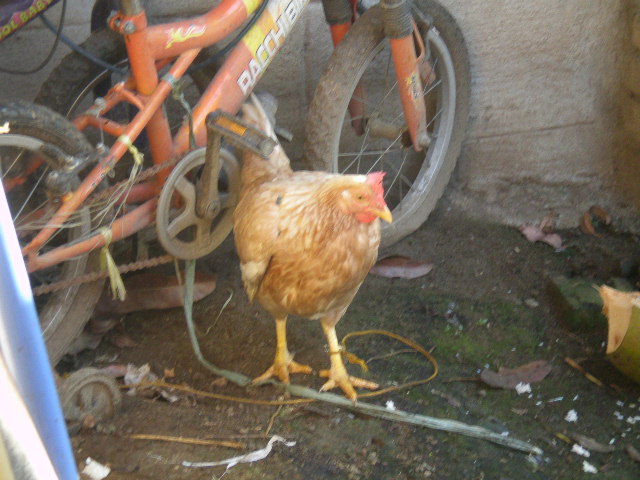
2 weekends ago I wrote about that native chicken I bought along the highway.  It looked healthy enough.  So we had it slaughtered and I got my raw parts from it.  But after eating the unlaid yolks and half the liver, I immediately felt bad.  I took my plate and went to the sink.  My mouth started an immense salivating process.  I knew I had to puke so I waited on the sink and sure enough my reliable puking reflex did it’s job.  Just like what it is supposed to do.  Now I know why the teacher Aajonus Vonderplanitz says to not eat the liver or internal organs of non-organic animals.

The chicken looked native, but since I did not know who raised the animal, I do not know what it was fed during its life.  Maybe that is why I do not get this reaction when I eat Jackie Dellota’s organic chicken.  Organic makes all the difference.

But going back to my after – puke ordeal.  For the next 3 days my tummy did not feel right.  I was feeling gassy pain and hyperacidity.  This is what I did to solve this problem.

I first took 6 capsules of barefoot herbalist LBB to make sure my bowels flowed out properly.

For the hyperacidity, on the first day I had my lunch as 1 pork liempo inihaw, picked the fattiest one from Baliwag.  That will help soak up excess digestive juices.  On the 2nd day I had seared bloody fatty sirloin steak with lots and lots of fat to soak up excess digestive juices.  And on the 3rd day lunch I had fatty pork liempo again.  Mornings at breakfast I would include 2 raw organic duck eggs in a bowl.

I noticed that the fatty food soaked up my hyperacidity in this case and as long as my tummy was busy digesting the fatty meals I did not feel any pain.  On the fourth day all tummy pain was gone and I’m back to eating my raw animal foods usually at lunch.  I went back for more raw ocean shrimp last Sunday… I really liked that ocean shrimp.

The lesson here is to heed what the guru’s have warned about non-organic animal livers.  The liver is a filter of toxins.  The reason that non-organic chicken looked healthy was because its liver was doing its job of filtering out toxins from its blood.  Will I come back to eating raw organic livers?  Of course.
United States Food and Drug Authority recognizes dangers of mercury / amalgam fillings

December 4, 2008 by Good Samaritan

Finally, the United States Food and Drug Authority has posted in its website that mercury / amalgam fillings are toxic.  What is idiotic in their website is they say the mercury toxicity warning only applies to children and pregnant women!  Why?  Are teenagers, adults and the elderly not as human as pregnant women and children?  That US-FDA is beholden to err on the side of the dental industry.  Just like the melamin fiasco, the US-FDA errs on the side of the infant formula industry.

The reason I post this is to alert our Philippine agencies and outdated dentists to flat out apologize for having harmed my generation and many other generations with their toxic mercury fillings.  Maybe we Filipinos should file class suits for damages as well.

Many Filipino dentists are beholden to the US American Dental Association education.  I hope this shakes up their industry.  What I’d like to happen in my lifetime is for the whole Philippine Dental industry to turn to Biological Dentistry.  All of those cosmetic dental technicians who know NOTHING about true human health be educated in HOLISTIC HEALTH so we can instantly have an army of biological dentists who will put pressure on Philippine conventional medicine to shape up or disappear.

Spread the word folks.  Mike Adams reported this in http://www.naturalnews.com/024993.html

The original US-FDA announcement is on http://www.fda.gov/cdrh/consumer/amalgams.html

Questions and Answers on Dental Amalgam
1. What is dental amalgam?

Dental amalgam is the silver-colored material used to fill (restore) teeth that have cavities. Dental amalgam is made of two nearly equal parts: liquid mercury and a powder containing silver, tin, copper, zinc and other metals. Mercury concentration in dental amalgams is generally about 50% by weight, while the silver concentration ranges from 20-35%.
2. What is FDA’s role in dental amalgam?

Dental amalgams are medical devices and are regulated by FDA’s Center for Devices and Radiological Health (CDRH). CDRH is responsible for ensuring that medical devices are reasonably safe and effective and that the labeling has adequate directions for use and any appropriate warnings.
3. What are the safety concerns about dental amalgam?

Dental amalgams contain mercury, which may have neurotoxic effects on the nervous systems of developing children and fetuses. When amalgam fillings are placed in teeth or removed from teeth, they release mercury vapor. Mercury vapor is also released during chewing. FDA’s rulemaking (described in question 7) will examine evidence concerning whether release of mercury vapor can cause health problems, including neurological disorders, in children and fetuses.

Since the 1990s, FDA and other government agencies (CDC, NIH) have reviewed the scientific literature looking for links between dental amalgams and health problems. In September 2006, an advisory panel to the FDA reviewed FDA’s research and heard presentations from the public about the benefits and risks of mercury and amalgam.

You can read the summary of the panel meeting at: http://www.fda.gov/cdrh/meetings/090606-summary.html

In addition, a complete transcript is available at: http://www.fda.gov/ohrms/dockets/ac/cdrh06.html#dentalproductspanel
4. Are there other dental filling materials that can be used instead of amalgam?

Yes, there are several other types of dental fillings.

Resin composites are tooth-colored materials made from powdered glass and resin compounds. When composites were initially introduced, they were not very strong and were used primarily in the front teeth. Newer composites are stronger, although they still tend to wear more than metal-based materials and generally need earlier replacement.

Glass ionomer cement is also a tooth-colored material. It is not usually used for long-term fillings because it breaks easily.

Porcelain, gold, and other metals are also used as filling materials. Gold and porcelain are used for inlays, veneers, crowns, and bridges. These fillings are made outside the mouth and cemented into place after they are formed.
5. Should I have my amalgam fillings removed and replaced with these other materials? If I have a cavity, should I choose to get amalgam fillings?

FDA does not recommend that you have your amalgam fillings removed. FDA is engaged in a rulemaking that may lead to revised labeling. It is also reviewing evidence about safe use, particularly in sensitive subpopulations.

If you are concerned about the possible health effects of amalgam fillings, you should talk with your qualified health care practitioner.

Dental amalgam fillings are very strong and durable, they last longer than most other types of fillings, and they are relatively inexpensive. You may want to weigh these advantages against the possibility that dental amalgam could pose a health risk, until further information is conveyed through the rulemaking (see question 7) or otherwise.
6. Should pregnant women and young children use or avoid amalgam fillings?

The recent advisory panel believed that there was not enough information to answer this question.

Some other countries follow a “precautionary principle” and avoid the use of dental amalgam in pregnant women. Advice about dental amalgams from regulatory agencies in other countries is available below.

Canada: http://www.hc-sc.gc.ca/ahc-asc/media/nr-cp/1996/1996_63_e.html
France: http://afssaps.sante.fr/ang/pdf/amalgam.pdf
Sweden: http://www.kemi.se/templates/Page.aspx?id=5233

Pregnant women and persons who may have a health condition that makes them more sensitive to mercury exposure, including individuals with existing high levels of mercury bioburden, should not avoid seeking dental care, but should discuss options with their health practitioner.
7. What is the next step for FDA?

In 2002, FDA published a proposed rule to classify dental amalgam as a class II device with special controls. On April 28, 2008, FDA reopened the comment period for that proposed rule. The comment period will be open until July 28, 2008. After reviewing all comments, FDA intends to issue a final rule classifying dental amalgam.

By July 28, 2008, FDA is requesting comments supported by empirical data and scientific evidence concerning this classification and special controls for dental amalgam. In addition, if class II (special controls) is the appropriate classification for these devices, FDA requests comment on whether the two types of special controls proposed by FDA in 2002 (materials and labeling) provide reasonable assurance of the safety and effectiveness of these devices and on whether the special controls FDA described in 2002 should be revised in light of the recommendations and with respect to the discussions by the 2006 joint committee.

Controls on the Materials. For example, should the material controls proposed by FDA address conformance to recognized consensus standards that make recommendations for testing, compressive strength, and identifying the mercury vapor released by the device?

Labeling Controls. For example, how should labeling controls, if any, address the disclosure of composition, including mercury content, and precautions regarding use of the device in sensitive subpopulations composed of individuals who respond biologically at lower levels of exposure to mercury than the general population? If so, which subpopulations should be included (e.g., children under age 6, pregnant and lactating women, hypersensitive or immunocompromised individuals)? Should the labeling controls require more specific patient labeling (e.g., informing patients of identified sensitive subpopulations of the mercury content, the alternatives to the device and their relative costs, and health risks associated with the failure to obtain dental care)?

For the agency’s future analysis of benefits and costs of the regulatory options for dental amalgams, FDA also requests comments, including available data, on the following questions:

(1) How many annual procedures use mercury amalgams? What are the trends?
(2) What are the differences in cost between amalgams and alternative materials (e.g., composite, other metals, ceramics, etc.)? Are there differences in replacement lives?
(3) What are reimbursement rates for dental amalgam and the alternative materials?
(4) How would labeling describing the risks of amalgam for certain subpopulations (e.g., children under age 6, pregnant and lactating women, hypersensitive or immunocompromised individuals) affect the demand for, and use of, mercury amalgam? How would the risks included in the labeling be communicated to those subpopulations?
(5) What is the current exposure to mercury for patients? For professionals? What would be the reduction in exposure associated with the use of alternative materials?

Updated June 3, 2008

Immediate sinusitis relief with quantum minerals plus and hydrogen peroxide

December 4, 2008 by Good Samaritan

My 7 year old boy seems to have inherited his mother’s tendency to suffer from sinusitis.  In the past months I’ve learned that putting a 50% diluted 10 volumes hydrogen peroxide in both his ears will clear up his sinuses.

This morning my boy was sluggish and wasn’t eating his papaya breakfast.  I found out later he was suffering from sinusitis.  I asked if I was to put hydrogen peroxide in his ears.  He suggested I wipe some quantum minerals plus drops on his forehead instead.  He says his Aunt did that once for him and it worked on his sinusitis.  So I put 2 drops of quantum and rubbed it on his forehead.

My boy has just finished his bath and is preparing to go to school.  He says there is only a little sinusitis left.  And he seems fine and ready to go to school.

I asked him if he wants me to put hydrogen peroxide in his ears.  He says he would rather have it later in the day when they get home from school.

Drug asking grandma gets coconut juice, quantum minerals plus drops and an ice pack for her dizzy spell and headache

December 2, 2008 by Good Samaritan

I picked up my sick 83 year old grandmother Sunday late afternoon so she could join us for dinner to celebrate my child and her great grandchild’s 4 year old birthday.  Almost home while still in the car she was asking for a drug named Bonamine.  She said it was for feeling sick while travelling in a vehicle.  I said we had no drugs at home.  She asked for vicks vapor rub.  I said we had none of that at home either.

We got home and immediately I had her drinking freshly opened fresh coconut juice, put 5 drops of quantum minerals plus drops on the top of her head and massaged it, and put an ice pack on her head.  She was blabbering about maybe she is suffering from high blood pressure.  I dismissed it and said she just needed fresh air because we drove windows closed with just the air conditioner.  She needs more oxygen.

A few minutes later some 15 minutes her headache and dizzy spell had subsided.  She got a taste of what we know.  Cultural differences.  She enjoyed watching some 10 children laugh and play as the centerpiece of the party.  She forgot her worries and walked a little stronger on the way back to ride the car.  I was with her twice in the restroom when she had to take a pee.  I noticed that our restrooms are not elderly injured friendly.

On the way to take her home we drove with the windows open so she does not get dizzy again.

I asked my 7 year old boy this morning if he was going to take care of me when I grow old and sick like his great grandmother.  He said he doesn’t need to do that.  I asked why?  He said I was knowledgable in health – healthy stuff so I won’t degenerate like that.  I hope my boy is right.

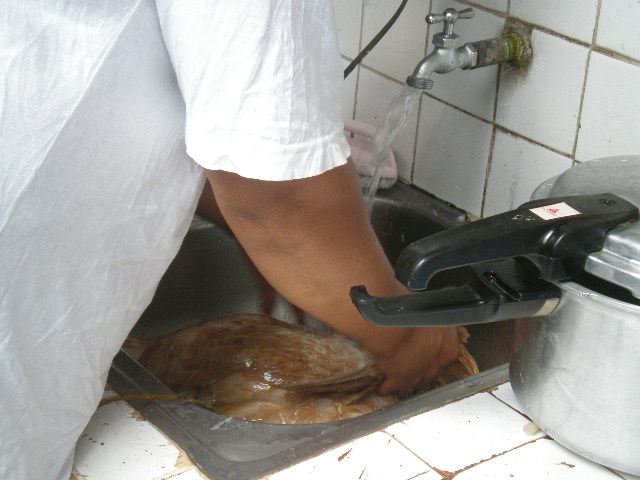
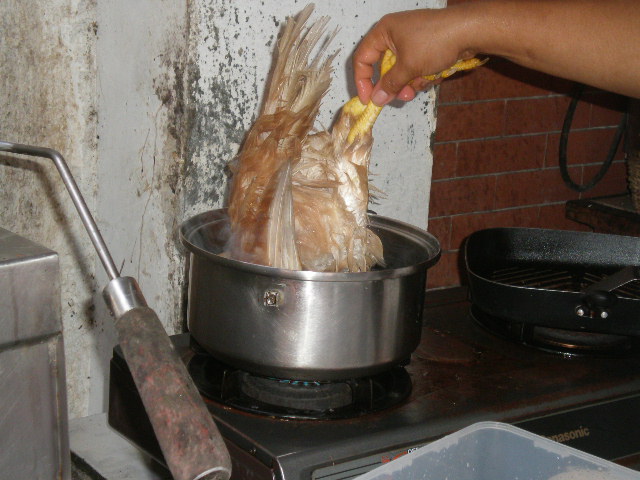
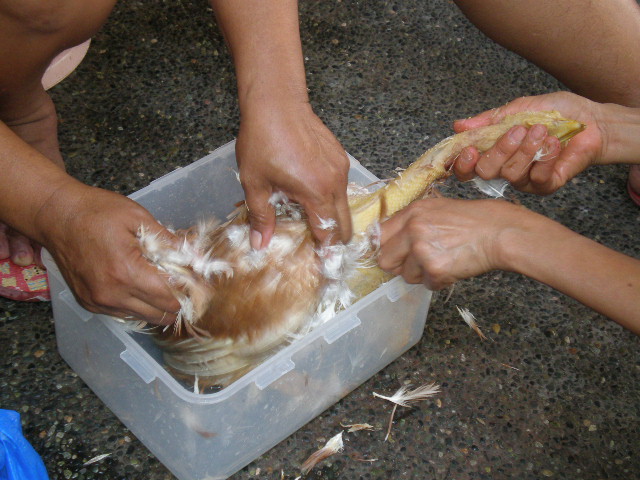
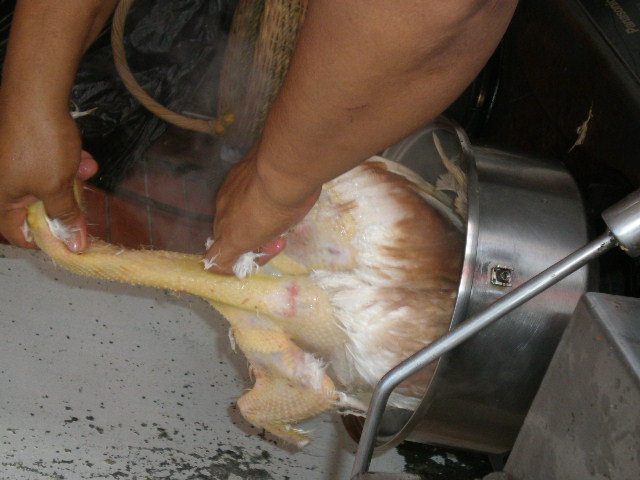
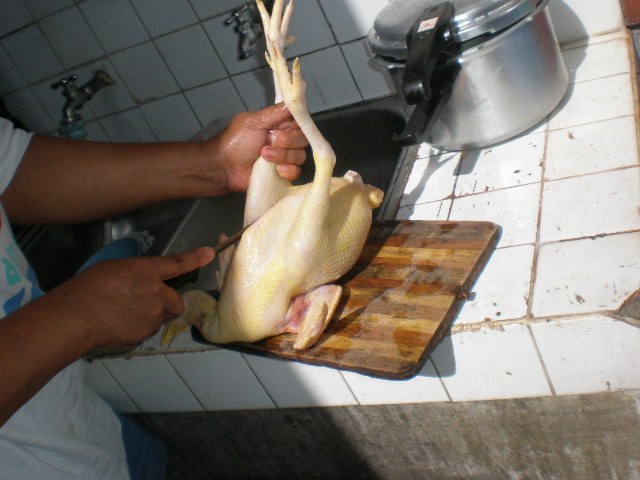
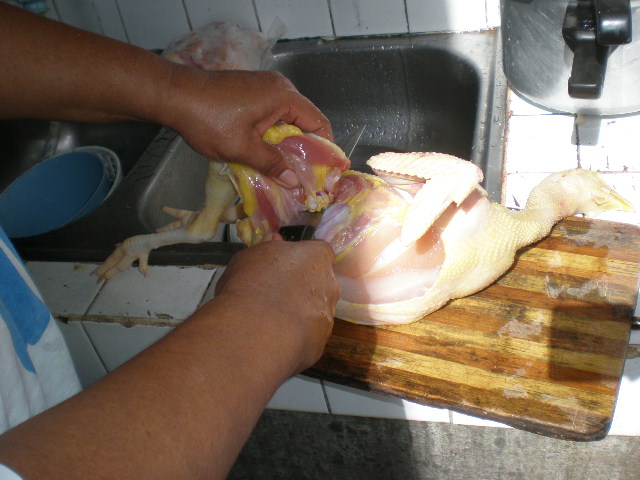
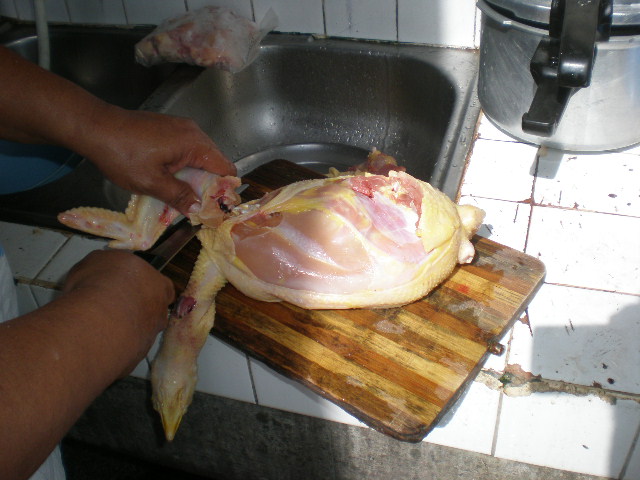
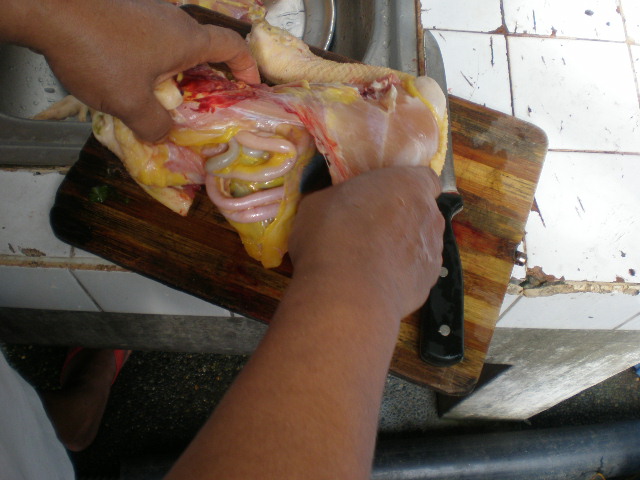
How we slaughter an organic native chicken step-by-step with pictures

December 1, 2008 by Good Samaritan

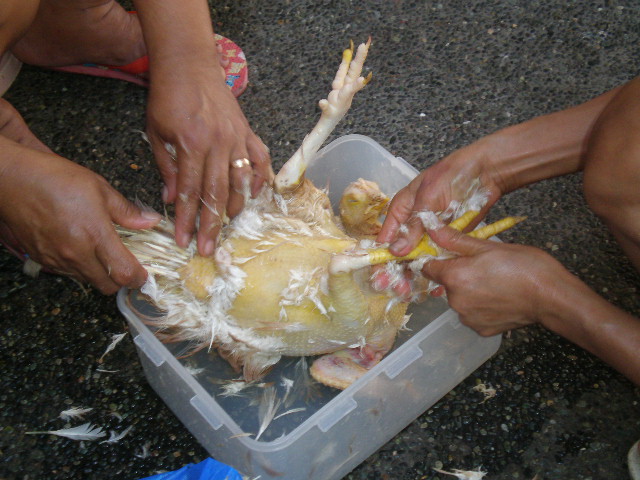
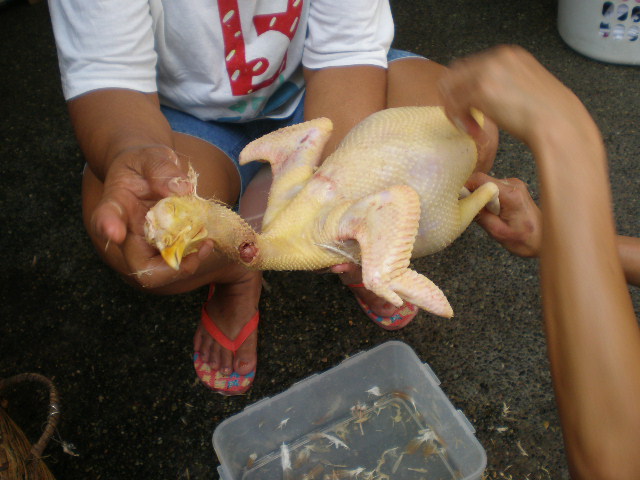
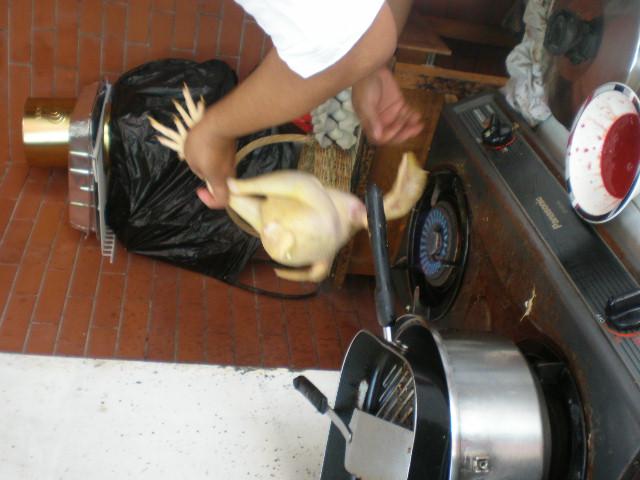
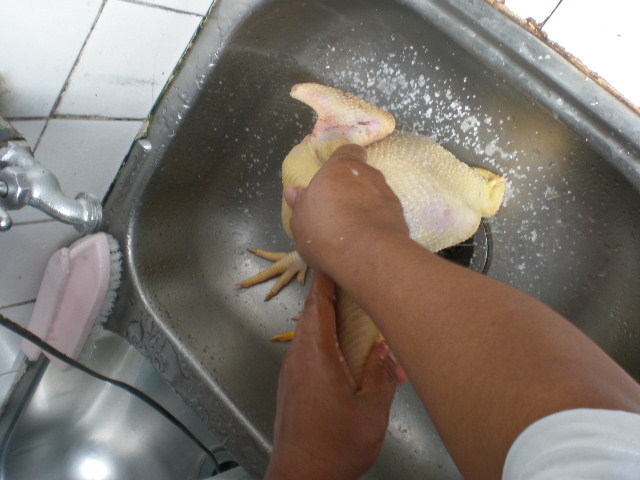
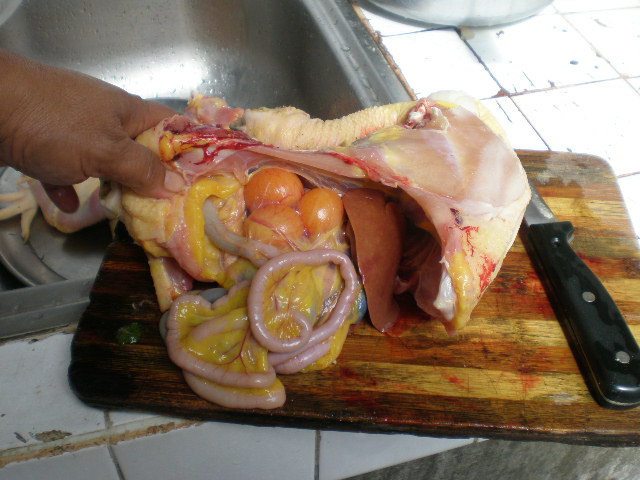
I will show in pictures our cook and my mother in law’s cook slaughter an organic chicken.  Last Sunday we were out in Carmona Cavite and beside the highway they were selling native chickens.  Great opportunity!  My cook and I were just talking about how we wanted to be sure about the chickens we were eating were healthy so it would be best to buy live chickens so we can assess their state of health and slaughter the chickens ourselves so we can also be sure about the cleanliness of the method.

I took quite some time looking at the chickens and I pointed to a fat strong female chicken.  The sellers said female chickens tasted better.  The chicken weighed in at 2 kilograms and was priced at 190 pesos per kilogram.  They tied both feet and tied its wings.  We put the chicken in the trunk.  It had to endure the trip from Carmona Cavite to Marikina in the trunk.

This morning I convinced my mother in law to have the native chicken for lunch.  She agreed.  I told the help we were having the chicken for lunch cooked BINAKOL style.  The help lamented she had fed the chicken this morning.  She gave the chicken lots of water to drink so that the chicken would have a lot of blood at slaughter.

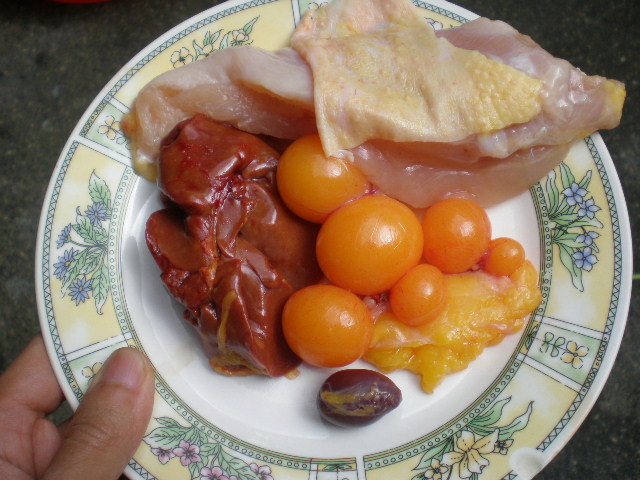
Here is a series of pictures with the picture file names as the description of the stage.  The last picture shows what I’m having for lunch. I had reserved my raw chicken parts again.  This time I got half of the breast, the liver, the kidney, some fat, some skin and the egg yolks still inside the chicken.  Wow… freshly slaughtered, never frozen organic chicken.

Click on each picture to see the description and click a second time to enlarge to full size 640×480 pixels.


The last picture shows what I’m having for my raw lunch: half of the breast, the liver, the kidney, some fat, some skin and the egg yolks still inside the chicken.

Bragg’s Liquid Aminos alternative to Soy Sauce in our Organic Chicken Teriyaki

December 1, 2008 by Good Samaritan

Yesterday we had a birthday party for our 4 year old girl.  The theme was Japanese.  We had chicken teriyaki, tuna sashimi, salmon sashimi and various types of sushi plus various fruits with a big watermelon being the highlight.  I can’t expect the guests to eat raw organic chicken like I do.Continue Reading

I discover and try for the first time raw ocean shrimp and raw ocean clams

November 29, 2008 by Good Samaritan

Saturday market day and today was a time for discovery.  With my trusty cook we went to Farmer’s Market in Cubao and bought many new things for me to taste.  This time I had clams in mind… the halaan variety.  Then we chanced upon ocean caught shrimps.

The nice lady vendor said that her clams were already dipped in salty water so they are now clean.  They have expunged their sand.  They are ready to eat.  I asked where they came from, she said this batch came from the ocean waters at Bataan province.  The other kind of clams came from ocean waters of Bicol.  That’s comforting to hear because I don’t trust Cavite waters.

I asked for a taste of the clams.  I thought she was going to get a knife to open one up.  Instead she just took one clam and smashed its shell in a corner of her stall.  I was surprised it was that easy.  And she gave me the smashed shell to eat.  It was pretty obvious that my cook and this lady vendor are used to eating raw clams.  And to my surprise these clams were tasty and slightly sweet.  For those who still cook, there is absolutely no need to cook these babies.  Now I realize those theories about humans may have evolved and thrived near the sea.  With abundant small fish and shellfish, you have an easy and delicious life.  Picking up a clam and smashing it on a stone is so easy a 4 year old child can do it.

Among the many other things we bought I chanced upon ocean caught shrimps. Maybe 6 inches long curved. If you remove the head it is just 4 inches long.  At home I first had a bowl with some natural coconut vinegar to dip the shrimps in.  I tasted the shrimps first and it tasted heavenly plain.  I returned the vinegar to its bottle.  I greedily ate all the shrimps without dipping them in vinegar.

After the shrimps I ate my freshly killed organic yellow never frozen raw bone marrow and raw sirloin.  Then I had dipped in vinegar some tiny ocean shrimp called alamang.  And to cap off lunch I chomped on some sea weed, lato variety, some small and some bigger bubbles.

We put the clams in water.  They are still alive.  Waiting to be eaten at dinner time.

« Previous Page
Next Page »

Incurables Healer: Vander Gaditano

Your first and best shot at curing the incurable illnesses. Yes, cancer and others. If I were sick and if I had the money, I would check in immediately with Vander Gaditano and be on my cure journey fast, very fast. Click Here.

Categories

  • Birth Control Lawsuits
  • Detoxing
  • Diseases
  • Featured Articles
  • Fertility
  • Fitness and Exercise
  • General Health
  • Longevity
  • Nurturing
  • Nutrition
  • Pain Relief
  • Parenting
  • Pollution Avoidance
  • Recommended Products
  • Resources
  • Safety
  • Weight Loss

My other sites

  • Bitter Melon Diabetes
  • Cure Testimonials
  • Dengue Cure
  • Diabetes Cure
  • Eczema Cure
  • Fertility Help Network
  • Paleo Diet
  • Pronatalist Blog
  • Psoriasis Cure
  • The Cure Library
  • The Cure Manual
  • Women Fertility

Sites I Admire

  • Best foods for Diabetics
Health & Medicine - Top Blogs Philippines