My Family Health Blog

Committed Family Healer's Research

  • Home
  • About
  • Archive
  • Contact
  • Donate!

I bought a 22 inch LCD monitor for productivity and health reasons

December 21, 2008 by Good Samaritan

I just got myself a 22 inch LCD monitor for productivity and health reasons. This ASUS monitor came in at only 14 thousand pesos. And with a resolution of 1680 x 1050 I have a lot of real estate space on my screen. Besides the fact that I have multiple desktop spaces because I run Ubuntu Linux.

I read and I have noticed productivity gains. Meaning people get to work better, faster and save time with a big monitor. So hopefully this new monitor allows me to rake in more money. I’m a computer geek, network administrator, website developer and trying to be a business man. This health blog and hobby healing is for friends and family.

Anyway, if I save time on my tasks, I have more free time for my kids, and other healthy endeavors… like watching Star Wars Clone Wars the new 2008-2009 TV series? And my complete collection of Star Wars videos?

My 7 year old boy is diagnosed with Primary complex, bronchitis, and tooth decay

December 21, 2008 by Good Samaritan

My wife thinks our 7 year old boy has had a cold and a cough for 3 months.  2 days ago she went to Dr. Divina Hey-Gonzales the anthroposophic doctor to have our boy checked.  Dr. Hey’s diagnosis is primary complex, bronchitis, and tooth decay.  Now my wife wants a witch hunt for possible tuberculosis carriers in our staff.  I noted that our in laws’ driver Benny is well known to have tuberculosis.  And that my analysis is that driver Benny has one missing kidney.  So his lungs are being tasked to do what a missing kidney cannot.

Back to our son, Dr. Hey prescribed her anthroposophic solution.

For primary complex: to be taken for 6 to 12 months

Ferrum Rosatum / Graphites – 10 drops – 4 times a day

Phosphorus D12 – 10 drops – 2x a day AM only

Archangelica Ointment – apply on the neck and massage downward for lymph flow – 2 times a day

For cough:

Pertudoron 1 – 10 drops – 4x per day

Pertudoron 2 – 10 drops – 4x per day

Vitamin C:

Acerola – 1 tablet – 3x per day

Other strategies fall on my lap, finally, I get a free hand.  So I’m putting my boy on a more paleolithic schedule and more alkaline diet.  First adjustment is for him to only eat 1 animal meal per day at lunch, just 1 animal food purely whether raw or cooked, but preferrably raw.  Breakfast is fruit and fatty fruit, and if hungry raw or soft boiled fertilized eggs, eat until stuffed.  For lunch 1 animal meal say for example yesterday was seared fatty sirloin beef steak and today he ate 4 cups of goto – beef innards with liver with little rice in a soup – dinner are just some light fruits or cucumbers.  I figure, this eating schedule, will result in better sleep, and the first night’s experiment is he did sleep better, he said no bad dreams and he was hungry in the morning.  This is a good sign.

This Sunday my boy chose to stay home with me so he says I could attend to him personally.

Lately he plays the recorder, a wind instrument being taught at school.  See and hear Cush play Rudolph the Red Nosed Reindeer.  He’s learning to speak some English.

My solution for tooth decay is already on the way. I had ordered the book Healing Our Children by Rami Nagel and it will arrive soon. It’s not for me, it’s for my wife to agree to the changes I need to implement in our diet. It’s time I killed this rice based diet lunacy. No amount of brushing or flossing will beat tooth decay as long as you stay in a rice based diet. I cured my rice addiction last year, it’s time the kids did the same while it is still early.

What is wrong with a rice based diet?

Rice is an original junk food, white rice is just empty carbohydrates.
Rice displaces more nutritious items like fruits, vegs and animal food.
The combination rice plus animal food is hard to digest and is highly acid forming.
Eliminating rice, we can switch to a high fat diet which allows to absorption of more vitamins and minerals.

Got bitten by sand flies in a beach in Palawan, Leishmaniasis again?

December 21, 2008 by Good Samaritan

The visit to Beach Walk beach was pleasant, it was a nice beach, very long, very wide, very shallow.  But my personal problem was I got bit by sand flies.  Many times.  Some 20 marks on my legs, my shoulders, and a few on my arms.  Reminds me of my 1994 suffering at the hands of sand flies in Boracay.  During those days i only had ignorant dermatologists who knew nothing and only made things worse with their innumerable injections and steroid creams.  I suffered for 2 years then.  I gave up on those dermatologists and let the itch run its course.

That isn’t going to happen these days in 2008.  We are smarter and well armed these days.  I’ve got clove oil, oregano oil, virgin coconut oil and zappers.  Much like in the youtube videos of protozoans being disintigrated by the zappers, I found much relief in zapping.  I merely step on my zapper terminals for 20 minutes, I have a don croft zapper.  I borrowed a barefoot herbalist MH dewormer bottle from my brother.  I am doing my kidney cleanses using avocado leaves tea.

And if all these measures fail, there are beam ray operators in Manila.  Beam ray machines are frequency generators and can shoot down all the protozoans that may be causing the leishmaniasis documented as being brought by the sand flies.  We shall see how these bites progress.

Luckily, the children were not bitten by the sand flies.  The victims were myself and my mother in law.

I came down with a cold and a headache for the first time this year.  Seems these sand fly bites have a lot more sting than the usual mosquito bite.  But this is Palawan, a strange place… who knows what is in those 20 bites?

Our family vacation in Natural, Pristine, Primitive, Isolated, Last Frontier Palawan

December 21, 2008 by Good Samaritan

The whole family went on vacation in Palawan for 5 days.  We stayed in the town of Aborlan in an educational organic farm.  Although we had visited this place once last year in December, we did not sleep over in the farm then.  This time we spent 4 nights there.  We went to 2 beaches.  We went to fresh water falls.  And the best part was the eating.  Being the last frontier of the Philippines, Palawan is a haven for us raw paleolithic diet practitioners.

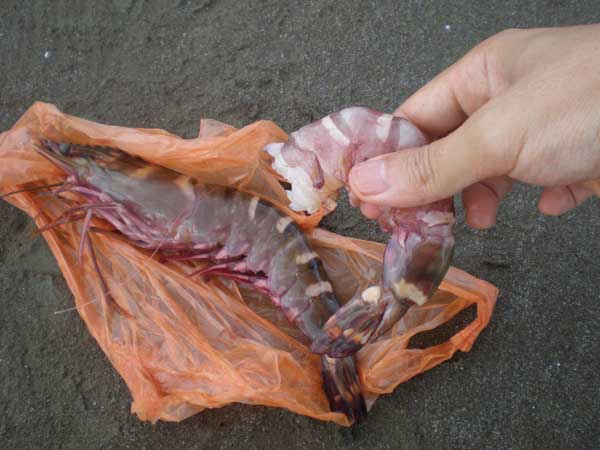
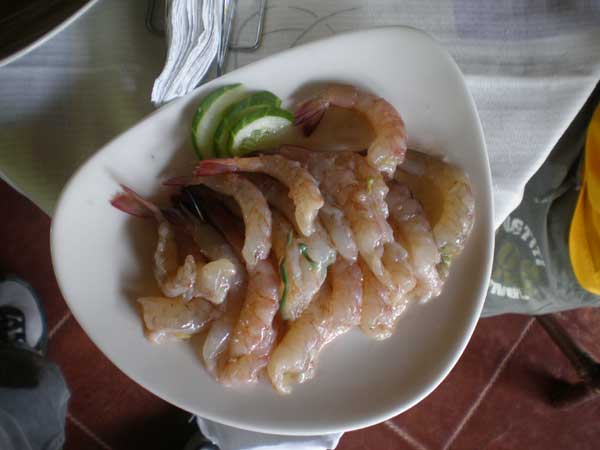
My first stop was to visit the big wet market in Puerto Princesa city.  I chanced upon live ocean shrimp, sea weed and sea urchin already cleaned up in easy to eat plastic bags… I wanted some vinegar and most vinegars sold were organic natural tuba vinegar… from coconuts… just 6 pesos for a small bottle. (In my Marikina city market, there are ZERO organic vinegars available… just factory made chemical vinegar.)  We arrived at a restaurant my wife fancies and on our arrival I had my fresh from the market stuff.  The waiter instinctively knew what to do.  He did not ask me at all how I wanted my shrimps to be cooked… he merely asked me if I wanted my shrimps to be shelled… and the kitchen did, making a nice raw presentation of the raw shrimps with some slices of cucumber for beauty.  So the restaurant people appreciate fresh raw animal foods… because it is natural for them to eat fresh raw ocean catches.

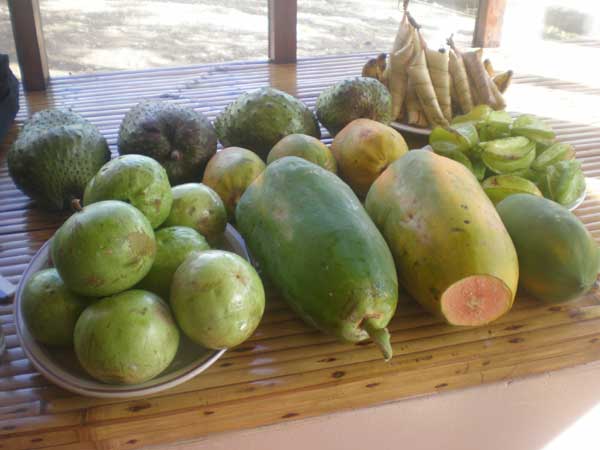
In the organic farm, they had abundant organic, sweet and healthy papaya boosted by a sack full of cow dung upon planting.  And Palawan has its own fruits which are all organic by default, organic by neglect, because this is the last frontier.  There were guyabanos, bananas, balimbings, singkamas, etc.

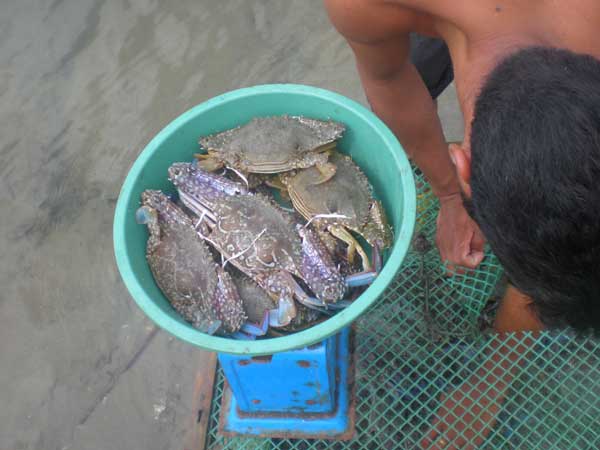
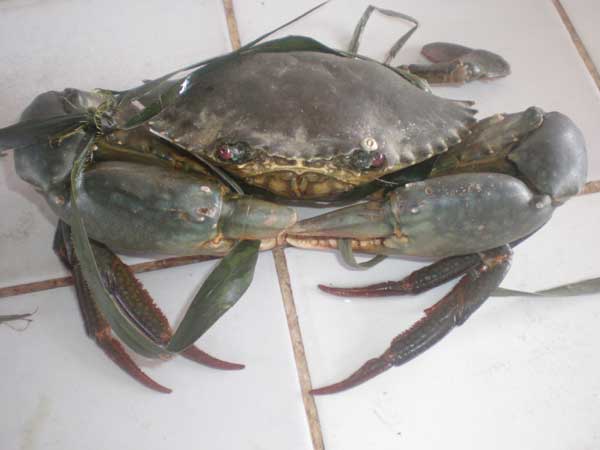
In the Aborlan town Saturday and Sunday market were more freshly caught ocean food that we raw foodists will absolutely adore.  The people here are of the mindset that fresh sea food means no ice, if you have to put ice in it, it is no longer fresh.  I got live clams, live freshwater crabs (alimango), live ocean crabs (alimasag), fresh ocean tiger prawns / shrimps, never frozen blue fin tuna and many others I couldn’t stuff myself any more. All so fresh… all so good raw… tummy is happy.  In the sunday market I even got a chance to buy freshly slaughtered Palawan grown beef… good bone marrow… good sirloin… tasted like ham.

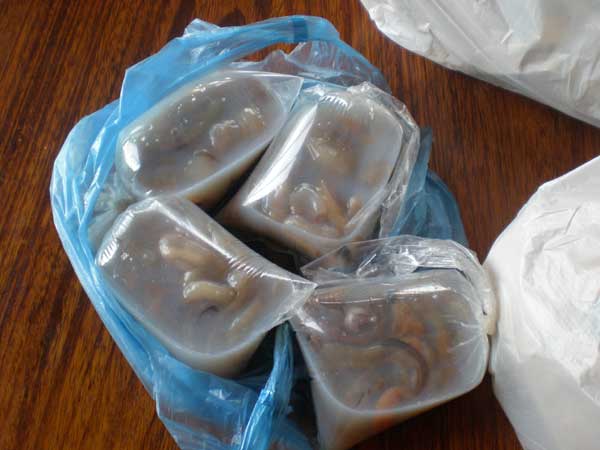
The more exotic things I tried there was the raw sea cucumber and the tamiluk.  Sea cucumber needed better cleaning, we didn’t know much how to do it.  But the tamiluk, our driver was an avid fan.  He had been eating tamiluk since 5 years old.  His wife is a fan too.  Tamiluk can be found in the market or in the highway.  Tamiluk are BIG WORMS that grow in the big dead mangrove trees.  Our driver says the dead mangrove trunks are chopped open, revealing the tamiluk inside.  The tamiluk is a foot long and less than an inch in diameter and has a hard shell for the head.  Our driver says the best part is the dark part… like the innards.  Contrary to the common city folk perception that the tamiluk worm may look slimy and may taste like intestines, it is not.  It is truly tasty, one of the best tastes around.  The dark part reminds of eating chocnut.  Tamiluk was so good we were looking for more after the first batch… and we were rewarded the morning before our flight.  You eat tamiluk either plain or with some vinegar.

Of course there is the clean air, the peace of mind, the relaxing environment.  The sights where there are lots of mangrove forests… which gives the supply of tamiluk.  The smell of a Philippine skunk… pantut… not bad, just unique smell.  There were gigantic bats that flew high up, slow flapping wings, reminds me of the movie Jurassic park.

At the corporate Christmas party there were the fantastic dancing talents from Palawan state university.  Awesome.  They danced different styles, you have to see the videos.

Now that I’m on raw paleo diet I have a better appreciation of nature.  Living, eating in the last frontier… in the natural setting… in Palawan is so cheap, easy and nutritious.  The coastal people I met had almost no need for money… they eat off the land.  I met a guy by the sea shore and he was picking shells for food.  He handed me one, I broke it open and ate the live creature inside… yummy.

Here are some pictures of food in Palawan.


Oprah admits she is obese, she needs TRUTH about Health & Nutrition, not gold diggers

December 10, 2008 by Good Samaritan

In the news this morning, television talk show host and billionaire Oprah Winfrey admits to weighing 200 pounds and for her height that is obese.  Everyone can see that on television, it is so obvious.  What is obvious to my mind is with all that money that Oprah has at her disposal… why can’t she buy the TRUTH about health and nutrition?

This is an excerpt on Yahoo News:

“I’m mad at myself,” Winfrey writes in an article provided early to The Associated Press by Harpo Productions.

“I’m embarrassed,” she writes. “I can’t believe that after all these years, all the things I know how to do, I’m still talking about my weight. I look at my thinner self and think, `How did I let this happen again?'”

In the piece, Winfrey, 54, details her recent struggles with an out-of-balance thyroid and how the condition made her develop “a fear of working out.” She says she’s added 40 pounds to her frame since she weighed 160 pounds in 2006.

“Yes, you’re adding correctly; that means the dreaded 2-0-0,” Winfrey writes. “I was so frustrated I started eating whatever I wanted — and that’s never good.”

I can see that sometimes, all that money clouds your judgement.  The snake oil salesmen, the most profitable garbage peddlers probably keep knocking on Oprah’s ears… for the money, money, money.  They do not care about Oprah as a person… they just want her money.  Whoever has been Oprah’s doctors or nutritional consultants are all failures.

Oprah needs to be educated in the truth about health.  The truth about her thyroid, the truth about her weight problem and possible complications with her overall health.  It is time Oprah searched for the TRUTH about health under cover,  off-camera, off-the-record.

Oprah needs to learn that she is the student.  She needs to find her teacher.  And when she finds her teacher, be humble and follow her teacher. If Dr. Henry Bieler were alive today, he would be a good teacher.  He is the author of Food is your Best Medicine.  He was the type who did not care how rich you are or how famous you are, he taught you just like any person.

My credentials?  I’ve been obese before myself.  And I decided I did not want to be obese anymore.  I discovered that truth in health slowly and spectacularly.  At this point in my life I am a raw paleolithic diet practitioner.

What personal advice can I give to Oprah if she asked me?

See my diet advice on cure manual http://www.curemanual.com/diet-strategies

Buy the book Food is your Best Medicine by Henry Bieler MD.

Then visit the Paleo Diet of Dr. Cordain and buy his book for advice on the paleo diet which still allows cooked meat.

Then visit http://www.rawpaleodiet.com , the ultimate destination to be in tip top shape.  The visit our support forum at http://www.rawpaleoforum.com

Raw Paleolithic Diet is organic raw ripe in season local fruits, organic raw vegetables and organic / grass fed / ocean / wild raw animal foods (fish, clams, squid, fertilized eggs, beef, chicken, goat, sheep, rabbits, etc.)

What can Oprah expect in a year if she follows my advice? See this video below.

Someone close to Oprah show her this blog post.  Teach her well.  She’s a good person.  She deserves the truth.

Experienced some food poisoning with raw chicken liver that was probably not organic

December 9, 2008 by Good Samaritan

2 weekends ago I wrote about that native chicken I bought along the highway.  It looked healthy enough.  So we had it slaughtered and I got my raw parts from it.  But after eating the unlaid yolks and half the liver, I immediately felt bad.  I took my plate and went to the sink.  My mouth started an immense salivating process.  I knew I had to puke so I waited on the sink and sure enough my reliable puking reflex did it’s job.  Just like what it is supposed to do.  Now I know why the teacher Aajonus Vonderplanitz says to not eat the liver or internal organs of non-organic animals.

The chicken looked native, but since I did not know who raised the animal, I do not know what it was fed during its life.  Maybe that is why I do not get this reaction when I eat Jackie Dellota’s organic chicken.  Organic makes all the difference.

But going back to my after – puke ordeal.  For the next 3 days my tummy did not feel right.  I was feeling gassy pain and hyperacidity.  This is what I did to solve this problem.

I first took 6 capsules of barefoot herbalist LBB to make sure my bowels flowed out properly.

For the hyperacidity, on the first day I had my lunch as 1 pork liempo inihaw, picked the fattiest one from Baliwag.  That will help soak up excess digestive juices.  On the 2nd day I had seared bloody fatty sirloin steak with lots and lots of fat to soak up excess digestive juices.  And on the 3rd day lunch I had fatty pork liempo again.  Mornings at breakfast I would include 2 raw organic duck eggs in a bowl.

I noticed that the fatty food soaked up my hyperacidity in this case and as long as my tummy was busy digesting the fatty meals I did not feel any pain.  On the fourth day all tummy pain was gone and I’m back to eating my raw animal foods usually at lunch.  I went back for more raw ocean shrimp last Sunday… I really liked that ocean shrimp.

The lesson here is to heed what the guru’s have warned about non-organic animal livers.  The liver is a filter of toxins.  The reason that non-organic chicken looked healthy was because its liver was doing its job of filtering out toxins from its blood.  Will I come back to eating raw organic livers?  Of course.

United States Food and Drug Authority recognizes dangers of mercury / amalgam fillings

December 4, 2008 by Good Samaritan

Finally, the United States Food and Drug Authority has posted in its website that mercury / amalgam fillings are toxic.  What is idiotic in their website is they say the mercury toxicity warning only applies to children and pregnant women!  Why?  Are teenagers, adults and the elderly not as human as pregnant women and children?  That US-FDA is beholden to err on the side of the dental industry.  Just like the melamin fiasco, the US-FDA errs on the side of the infant formula industry.

The reason I post this is to alert our Philippine agencies and outdated dentists to flat out apologize for having harmed my generation and many other generations with their toxic mercury fillings.  Maybe we Filipinos should file class suits for damages as well.

Many Filipino dentists are beholden to the US American Dental Association education.  I hope this shakes up their industry.  What I’d like to happen in my lifetime is for the whole Philippine Dental industry to turn to Biological Dentistry.  All of those cosmetic dental technicians who know NOTHING about true human health be educated in HOLISTIC HEALTH so we can instantly have an army of biological dentists who will put pressure on Philippine conventional medicine to shape up or disappear.

Spread the word folks.  Mike Adams reported this in http://www.naturalnews.com/024993.html

The original US-FDA announcement is on http://www.fda.gov/cdrh/consumer/amalgams.html

Questions and Answers on Dental Amalgam
1. What is dental amalgam?

Dental amalgam is the silver-colored material used to fill (restore) teeth that have cavities. Dental amalgam is made of two nearly equal parts: liquid mercury and a powder containing silver, tin, copper, zinc and other metals. Mercury concentration in dental amalgams is generally about 50% by weight, while the silver concentration ranges from 20-35%.
2. What is FDA’s role in dental amalgam?

Dental amalgams are medical devices and are regulated by FDA’s Center for Devices and Radiological Health (CDRH). CDRH is responsible for ensuring that medical devices are reasonably safe and effective and that the labeling has adequate directions for use and any appropriate warnings.
3. What are the safety concerns about dental amalgam?

Dental amalgams contain mercury, which may have neurotoxic effects on the nervous systems of developing children and fetuses. When amalgam fillings are placed in teeth or removed from teeth, they release mercury vapor. Mercury vapor is also released during chewing. FDA’s rulemaking (described in question 7) will examine evidence concerning whether release of mercury vapor can cause health problems, including neurological disorders, in children and fetuses.

Since the 1990s, FDA and other government agencies (CDC, NIH) have reviewed the scientific literature looking for links between dental amalgams and health problems. In September 2006, an advisory panel to the FDA reviewed FDA’s research and heard presentations from the public about the benefits and risks of mercury and amalgam.

You can read the summary of the panel meeting at: http://www.fda.gov/cdrh/meetings/090606-summary.html

In addition, a complete transcript is available at: http://www.fda.gov/ohrms/dockets/ac/cdrh06.html#dentalproductspanel
4. Are there other dental filling materials that can be used instead of amalgam?

Yes, there are several other types of dental fillings.

Resin composites are tooth-colored materials made from powdered glass and resin compounds. When composites were initially introduced, they were not very strong and were used primarily in the front teeth. Newer composites are stronger, although they still tend to wear more than metal-based materials and generally need earlier replacement.

Glass ionomer cement is also a tooth-colored material. It is not usually used for long-term fillings because it breaks easily.

Porcelain, gold, and other metals are also used as filling materials. Gold and porcelain are used for inlays, veneers, crowns, and bridges. These fillings are made outside the mouth and cemented into place after they are formed.
5. Should I have my amalgam fillings removed and replaced with these other materials? If I have a cavity, should I choose to get amalgam fillings?

FDA does not recommend that you have your amalgam fillings removed. FDA is engaged in a rulemaking that may lead to revised labeling. It is also reviewing evidence about safe use, particularly in sensitive subpopulations.

If you are concerned about the possible health effects of amalgam fillings, you should talk with your qualified health care practitioner.

Dental amalgam fillings are very strong and durable, they last longer than most other types of fillings, and they are relatively inexpensive. You may want to weigh these advantages against the possibility that dental amalgam could pose a health risk, until further information is conveyed through the rulemaking (see question 7) or otherwise.
6. Should pregnant women and young children use or avoid amalgam fillings?

The recent advisory panel believed that there was not enough information to answer this question.

Some other countries follow a “precautionary principle” and avoid the use of dental amalgam in pregnant women. Advice about dental amalgams from regulatory agencies in other countries is available below.

Canada: http://www.hc-sc.gc.ca/ahc-asc/media/nr-cp/1996/1996_63_e.html
France: http://afssaps.sante.fr/ang/pdf/amalgam.pdf
Sweden: http://www.kemi.se/templates/Page.aspx?id=5233

Pregnant women and persons who may have a health condition that makes them more sensitive to mercury exposure, including individuals with existing high levels of mercury bioburden, should not avoid seeking dental care, but should discuss options with their health practitioner.
7. What is the next step for FDA?

In 2002, FDA published a proposed rule to classify dental amalgam as a class II device with special controls. On April 28, 2008, FDA reopened the comment period for that proposed rule. The comment period will be open until July 28, 2008. After reviewing all comments, FDA intends to issue a final rule classifying dental amalgam.

By July 28, 2008, FDA is requesting comments supported by empirical data and scientific evidence concerning this classification and special controls for dental amalgam. In addition, if class II (special controls) is the appropriate classification for these devices, FDA requests comment on whether the two types of special controls proposed by FDA in 2002 (materials and labeling) provide reasonable assurance of the safety and effectiveness of these devices and on whether the special controls FDA described in 2002 should be revised in light of the recommendations and with respect to the discussions by the 2006 joint committee.

Controls on the Materials. For example, should the material controls proposed by FDA address conformance to recognized consensus standards that make recommendations for testing, compressive strength, and identifying the mercury vapor released by the device?

Labeling Controls. For example, how should labeling controls, if any, address the disclosure of composition, including mercury content, and precautions regarding use of the device in sensitive subpopulations composed of individuals who respond biologically at lower levels of exposure to mercury than the general population? If so, which subpopulations should be included (e.g., children under age 6, pregnant and lactating women, hypersensitive or immunocompromised individuals)? Should the labeling controls require more specific patient labeling (e.g., informing patients of identified sensitive subpopulations of the mercury content, the alternatives to the device and their relative costs, and health risks associated with the failure to obtain dental care)?

For the agency’s future analysis of benefits and costs of the regulatory options for dental amalgams, FDA also requests comments, including available data, on the following questions:

(1) How many annual procedures use mercury amalgams? What are the trends?
(2) What are the differences in cost between amalgams and alternative materials (e.g., composite, other metals, ceramics, etc.)? Are there differences in replacement lives?
(3) What are reimbursement rates for dental amalgam and the alternative materials?
(4) How would labeling describing the risks of amalgam for certain subpopulations (e.g., children under age 6, pregnant and lactating women, hypersensitive or immunocompromised individuals) affect the demand for, and use of, mercury amalgam? How would the risks included in the labeling be communicated to those subpopulations?
(5) What is the current exposure to mercury for patients? For professionals? What would be the reduction in exposure associated with the use of alternative materials?

Updated June 3, 2008

« Previous Page
Next Page »

Incurables Healer: Vander Gaditano

Your first and best shot at curing the incurable illnesses. Yes, cancer and others. If I were sick and if I had the money, I would check in immediately with Vander Gaditano and be on my cure journey fast, very fast. Click Here.

Categories

  • Birth Control Lawsuits
  • Detoxing
  • Diseases
  • Featured Articles
  • Fertility
  • Fitness and Exercise
  • General Health
  • Longevity
  • Nurturing
  • Nutrition
  • Pain Relief
  • Parenting
  • Pollution Avoidance
  • Recommended Products
  • Resources
  • Safety
  • Weight Loss

My other sites

  • Bitter Melon Diabetes
  • Cure Testimonials
  • Dengue Cure
  • Diabetes Cure
  • Eczema Cure
  • Fertility Help Network
  • Paleo Diet
  • Pronatalist Blog
  • Psoriasis Cure
  • The Cure Library
  • The Cure Manual
  • Women Fertility

Sites I Admire

  • Best foods for Diabetics
Health & Medicine - Top Blogs Philippines